Older architecture across Allegheny County creates microclimates where carpenter ants (Camponotus pennsylvanicus) thrive. In neighborhoods like Bloomfield, Lawrenceville, and South Side Flats, century-old timber…
Older architecture across Allegheny County creates microclimates where carpenter ants (Camponotus pennsylvanicus) thrive. In neighborhoods like Bloomfield, Lawrenceville, and South Side Flats, century-old timber framing and multi-layer balloon construction present hidden access paths. Carpenter ants do not consume cellulose like termites; instead, they excavate damp wood to carve out smooth nesting galleries. According to the Penn State Extension, parent colonies frequently establish satellite nests indoors once moisture intrusion softens window framing or masonry contact points. Treating these internal colonies requires targeted access rather than general baseboard spraying, which simply repels workers and fractures the colony into secondary framing members.
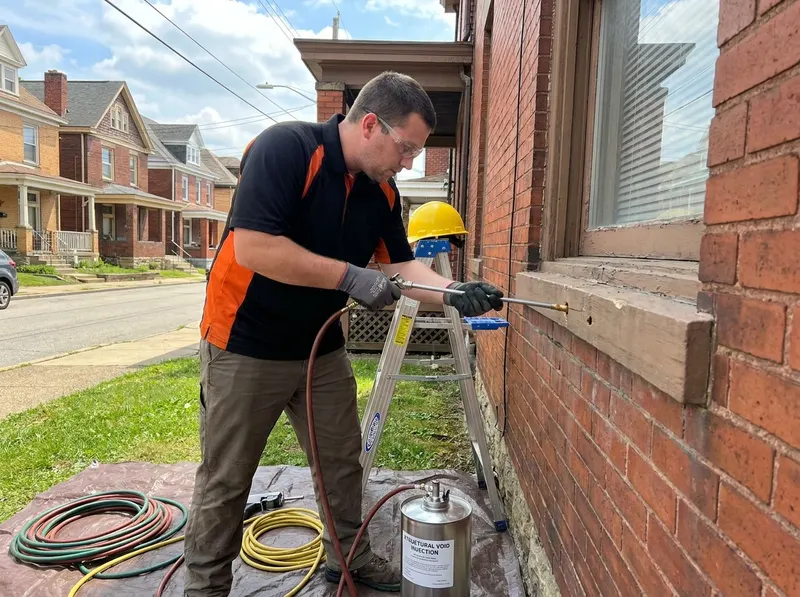
Structural void treatment delivers measured, micro-aerosolized non-repellent formulations directly into occupied wall spaces. Nexford Pest Solutions uses specialized equipment to inject agents registered by the U.S. Environmental Protection Agency through tiny 1/8-inch access points behind switch plates or baseboard trim, maintaining indoor air quality and pet safety. The non-repellent transfer chemistry leverages natural social grooming behaviors documented by the Entomological Society of America, eradicating both satellite nymphs and reproductive queens within 14 to 21 days. Moisture tracking aligns with guidance from the International Association of Certified Home Inspectors to detect plumbing seepage or flat-roof pooling common near Highland Park and East Liberty rowhouses, ensuring damp wood conditions are cataloged for repair.
Decision guidance depends on nest age and the presence of frass, the sawdust-like debris expelled from exit holes. If fine wood shavings appear beneath baseboards in a Squirrel Hill Victorian or Shadyside duplex, active satellite nesting inside wall framing is confirmed. If outdoor foragers are merely scouting exterior stone foundations near Frick Park or along Mount Washington retaining walls, an exterior perimeter barrier certified under National Pest Management Association guidelines prevents indoor void colonization. The trade-off between localized void injection and exterior-only management centers on structural security versus initial expense: treating the void halts internal timber damage immediately, whereas exterior-only sprays leave internal galleries active if nesting is already established.
1. Initial thermal and acoustic assessment locates damp studs and active gallery hollows within the wall void.
2. Strategic 1/8-inch access ports are placed unobtrusively behind wall plates or along baseboard seams.
3. Micro-injection dispersion applies targeted non-repellent dusts and foams directly inside structural framing.
4. Exterior perimeter perimeters are secured using botanical or low-toxicity materials approved under the Pennsylvania Department of Agriculture bureau of plant industry standards.
5. Access ports are sealed flush with matching silicone or wood patch compounds to restore wall integrity.
Every job gets a firm, written price after a free on-site visit.
Tell us about your carpenter ant structural void treatment job in Pittsburgh and we'll send a clear, written quote, usually the same day.
 Nexford Pest Solutions